The Landmark Vote on Chilean Avenue That Every Palm Beach Buyer Should Understand
September 17, 2026
September 17, 2026
Can a town tell you no on your own house, even after you've closed, even after you've fought it, even after your lawyer stood up and said the building doesn't qualify?
In Palm Beach, the answer is yes. In May 2026, the Town Council proved it on a century-old bungalow two blocks north of Worth Avenue, and the vote is worth understanding before you write an offer on anything older than the last decade of construction.
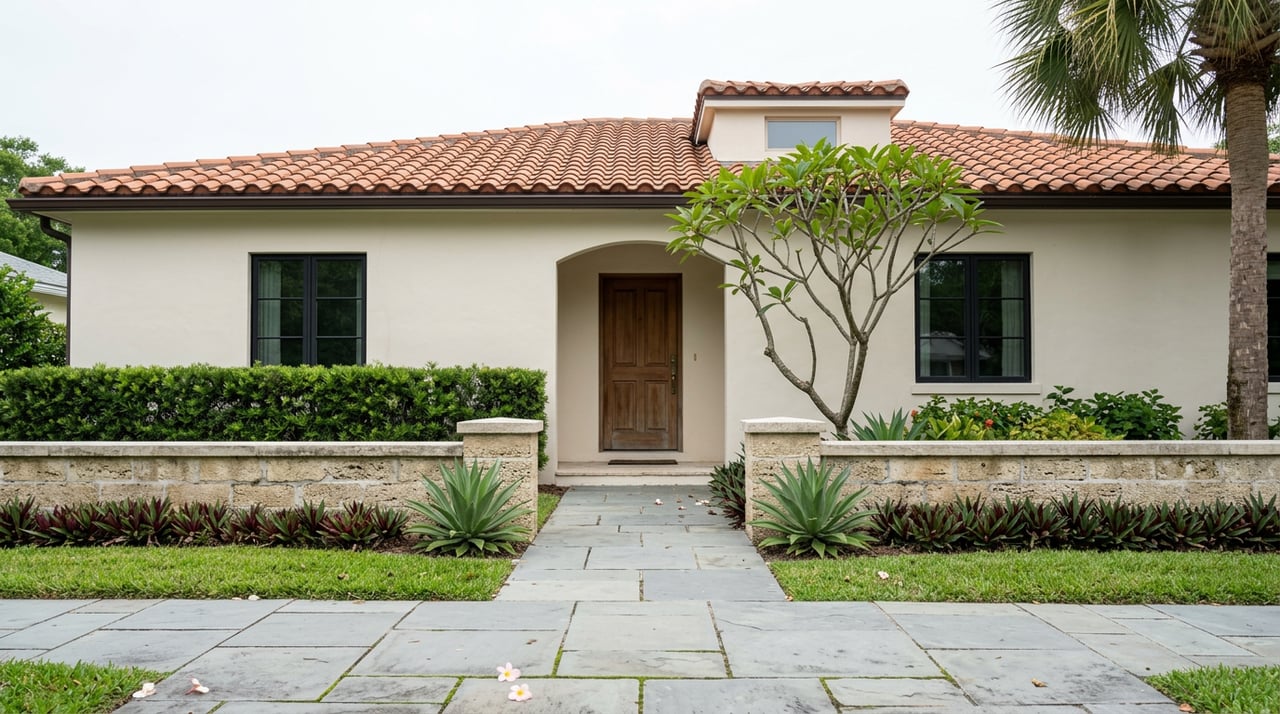
The house at 141 Chilean Avenue sits in the Royal Park subdivision, just east of Town Hall. It had been owned by the same Florida-registered corporation, Chant (Palm Beach) Corp., for nearly 34 years. Before that, the property passed through just three other owners across most of the twentieth century, including a nearly 40-year stretch under one family and a run from 1956 to 1992 under two more.
When the Landmarks Preservation Commission recommended the house for designation, the owner objected. Attorney Maura Ziska argued to the Town Council that the structure failed to meet criteria 1 and 3 of the town's landmarks ordinance, the sections covering historical significance and architectural distinction, and that designation would create a financial burden. Council members Lew Crampton and Nicki McDonald agreed the house wasn't a strong example of its style.
The vote came in at 2-2. Mayor Danielle Moore broke the tie. "I think it's charming and I think it's worth keeping," she said, according to the Palm Beach Daily News. The final tally was 3-2, and 141 Chilean Avenue became a landmark over its owner's formal objection.
Nothing about that outcome required the house to be famous, oceanfront, or architecturally rare. It came down to a single vote swinging the room one way instead of the other. That's the part buyers underestimate: designation in Palm Beach doesn't ride on the market's opinion of a house. It rides on a commission's criteria and a council majority, and ownership doesn't get a veto.
Once a property carries landmark status, or sits inside one of the town's historic districts, the review authority for any exterior change shifts away from the standard process most buyers expect.
| Non-landmarked property | Landmarked property or historic district | |
|---|---|---|
| Reviewing body | Architectural Commission (ARCOM) | Landmarks Preservation Commission (LPC) |
| What triggers review | New construction, additions, changes visible from the street | Same, plus many interior features in some cases |
| Meeting cadence | Per the Town's published development review calendar | Monthly, on the third Wednesday |
| Governing code | The Town's Architectural Commission Ordinance | Chapter 54 of the Town Code |
| Commission size | Seven members plus three alternates, with at least two licensed architects | Seven members, six of whom must be Town residents |
The Town of Palm Beach currently counts more than 328 landmark properties, sites, and vistas under its Historic Preservation Ordinance, first adopted in 1979. Layer historic districts on top of that number and the exposure widens further: pockets of protected streetscape reach into Midtown, the Sea Street area, the El Brillo corridor in the South End, and parts of the North End. A house doesn't have to be individually landmarked to fall under LPC review. It only has to sit inside one of those boundaries.
Here's where the timing gets specific to right now. Palm Beach's single-family median sale price has climbed from $8 million in 2021 to $12.9 million so far in 2026, a 62 percent move, while the median price per square foot rose from roughly $1,988 to about $3,168 over the same stretch. Market time has more than doubled too, from a median of 44 days in 2021 to around 112 days today, which is less a slowdown than a return to a market where buyers can actually take time to look before they write.
None of that is unusual for a hot coastal market that's cooled into a considered one. What's specific to Palm Beach right now is how much of that price sits in the dirt rather than the building. Among $10 million-and-up estate sales this year, the median land value has run near $47.4 million per acre. On a barrier island with roughly 1,900 houses and no way to add land, that math pushes buyers toward a familiar plan: buy the lot, plan to rebuild, treat the existing structure as a placeholder.
That plan works fine until the placeholder turns out to be 328-and-one. A house that looks like a teardown to a buyer, particularly a bungalow, a Mediterranean Revival cottage, or anything with an interesting roofline in the North End or Estate Section, is exactly the profile the Landmarks Preservation Commission is built to flag. The lower the purchase price relative to the lot, the more likely the seller (or a prior owner, or a neighbor) never bothered fighting a designation that a rebuild-minded buyer will inherit.
There is one real statutory escape valve, and it's worth knowing precisely what it covers. Under a Florida law passed in 2022, a single-family homeowner who objects to a landmark designation may be allowed to demolish the home anyway if the property sits in a designated flood-hazard area and the structure doesn't meet FEMA's flood-elevation standards.
Given that flood exposure is closer to the rule than the exception on this island, that sounds like it should cover a lot of ground. Flood-risk models cited through First Street's analysis put 91 percent of Palm Beach properties at risk of severe flooding over the next 30 years. But the 2022 law isn't a general flood-risk exemption. It requires a specific FEMA flood-hazard-area designation and a documented failure to meet elevation standards, a narrower technical bar than simply being on a barrier island. A home that's already been elevated to code, or one that sits just outside the mapped hazard boundary, doesn't get the benefit of that exception even if the neighborhood around it floods regularly. Buyers who hear about this law secondhand tend to assume it applies more broadly than it does. Confirming actual FEMA zone status and elevation compliance, in writing, before closing, is the only way to know whether it applies to a specific address.
Before a contract goes out on any Palm Beach house you're planning to renovate or replace, it's worth confirming:
None of this shows up on a listing sheet. It shows up in a staff conversation, a property record request, and sometimes a look at old LPC study lists that never resulted in formal designation but could resurface.
This is the kind of due diligence that sits closer to design and permitting than to a standard home inspection, which is exactly the gap a background in renovation management is built to close. Knowing what a house's bones can support, and what the Town will let you do to them, is a design question before it's ever a legal one.
If you're evaluating an older home on the island, whether it's a rebuild candidate or a renovation project, Vicky McKeown can help you price the landmark and permitting risk before you write the offer, not after. Request a Concierge Review to walk through a specific address before your contingency clock starts.
Does landmark status hurt resale value? It depends on the buyer. Some see prestige in a documented history and a Town-protected streetscape. Others read the same designation as a ceiling on what they can change, which shows up as a discount in their offer. Both reactions are common in the same market.
Can I close on a Palm Beach house before I know if my renovation will be approved? Yes, and most buyers do. The tradeoff is that the design review clock starts at closing rather than at contract, so carrying costs during that review period become the buyer's expense rather than the seller's.
If my target house isn't currently landmarked, am I safe? Not automatically. Designation can be proposed at any point, including after you've closed, and owner objection doesn't stop it. A house's age, architectural style, and location inside a historic district boundary all factor into whether it's a plausible future candidate, regardless of its current status.
Stay up to date on the latest real estate trends.


Vicky’s unique combination of skills empowers her clients to utilize her expertise in both the listing and sale of their homes.